Things to Do in Mandalay in January
January weather, activities, events & insider tips
Low Season · Budget Friendly
January Weather in Mandalay
Long-run averages for January
85°F (29°C)
High Temp
57°F (14°C)
Low Temp
0.2 inches (5 mm)
Rainfall
63%
Humidity
6
Sunny-Day UV
⚠ The 15°C (27°F) temperature swing between dawn and midday catches travelers off guard. Dress in removable layers. What feels cold at the 4 AM Mahamuni ceremony will feel warm by the time you reach Sagaing Hill at noon. Pack accordingly.
⚠ Dry-season dust in Mandalay is pervasive, on unpaved roads around the ancient capitals of Inwa and Amarapura. Travelers with respiratory sensitivities should carry a dust mask. Be prepared for irritated sinuses by evening. The dust is relentless.
⚠ Late January can see the earliest traces of agricultural burning haze from surrounding farmland. This is a precursor to the severe smoky season that peaks in March and April. Visibility and air quality are typically still good in January. Conditions may deteriorate in the final week of the month depending on regional burning patterns.
Making the most of January in Mandalay? Browse tours and activities in Mandalay on GetYourGuide.
Is January Right for You?
Weigh the advantages and considerations before booking
Advantages
- + January shares the coolest weather with December. Mornings drop to 14°C (57°F). Afternoons climb to 29°C (85°F). That fifteen-degree spread lets you walk for hours through the ancient capitals circuit, Amarapura, Sagaing, Inwa, without the crushing heat that makes the same route dangerous by April, when highs exceed 39°C (102°F). Dry air and low humidity make sunrise from Mandalay Hill comfortable, not the sweat-soaked ordeal it becomes in wet months.
- + Rainfall in January is nearly zero. Five millimeters (0.2 inches) total. The Irrawaddy runs low and calm, good for the upstream boat ride to Mingun. Skies stay clear enough to spot the Shan Plateau east from Sagaing Hill, a view that disappears under haze by March. Outdoor plans rarely get cancelled. This matters when Mandalay's best experiences involve bare feet on sun-warmed pagoda platforms.
- + Tourism in Myanmar remains far below pre-2019 levels. Even January, traditionally peak season, means you'll probably have major sites like Kuthodaw Pagoda and its 729 marble inscription slabs largely to yourself. The Mahamuni Buddha Temple still attracts devoted local crowds for the 4 AM face-washing ceremony. The foreign tourist crush that once made photographing the gold-leaf-encrusted image nearly impossible has thinned dramatically.
- + January's cool, dry conditions align with Mandalay's most rewarding craft activity. Gold leaf workshops along 36th Street between 77th and 78th operate year-round, but artisans clearly prefer the cool season. The hammering generates intense heat. Watching a craftsman pound a gold nugget into leaf thinner than a human hair is more pleasant when the workshop isn't already an oven. Silk weavers in Amarapura likewise produce their finest work during cool months, when thread tension stays consistent in lower humidity.
Considerations
- − Myanmar's political situation since 2021 has complicated travel. Infrastructure that once worked reliably, domestic flights, intercity buses, banking, can fail without warning. Check your government's current travel advisory before committing to plans. Build flexibility into your itinerary. Travel insurance covering political instability and medical evacuation is essential here. Not optional. Essential.
- − January nights in Mandalay get cold by Southeast Asian standards. At 14°C (57°F), a cheap guesthouse room with tile floors, no heating, and a thin blanket makes for a miserable night. Most budget accommodation was built for hot season, not cool. If you run cold, bring a fleece or request extra blankets on arrival. Heated rooms barely exist outside a handful of higher-end places.
- − Dust defines Mandalay in dry season. Unpaved side roads, construction sites, and sandy approaches to sites like Inwa kick up fine red-brown dust that coats everything. Your clothes. Your camera lens. The inside of your bag. By late afternoon, low-angle sun catches the particulates and air turns hazy, sepia. Atmospheric in photos. Less romantic in your sinuses.
Settled on January? Compare hotel prices in Mandalay for your dates on Trip.com.
Best Activities in January
Top things to do during your visit
January settles over Mandalay like a long exhalation after the monsoon months. The Irrawaddy runs low and copper-colored, its sandbars exposed beneath a sky that stays cloudless for weeks at a stretch. Daytime temperatures reach around 29 degrees Celsius, warm enough for shirt sleeves but mercifully short of the furnace heat that arrives by March, when the thermometer climbs past 37. Mornings start cool, down near 14 degrees at dawn, and the air carries woodsmoke and the scent of sesame oil from breakfast stalls frying e kya kway along the streets south of Zegyo Market. Rain is essentially absent, with barely five millimetres falling across the entire month. That means the unpaved tracks around Mandalay's outer monasteries stay firm underfoot. The dust that plagues the hot season has not yet kicked up. This is the season when Mandalay's pace feels most deliberate. Monks file through the grid-plan streets before sunrise, their bare feet slapping the cold pavement, collecting alms while mist still hangs low over the moat surrounding the Royal Palace. Gold-leaf workshops in the lanes near Mahamyatmuni Pagoda are at full production, the rhythmic thud of mallets pounding gold into translucent sheets audible from the street. By mid-morning the workshops warm enough that the doors stand open, letting in the faint sweetness of frangipani from the courtyard trees. The dry weather also makes January one of the most practical windows for reaching sites outside the city proper. The ancient capitals of Ava, Sagaing, and Mingun are all accessible without the muddy detours that plague the wet months. The Irrawaddy ferry to Mingun runs reliably on its low-water schedule. Evening temperatures drop enough that sitting on the eastern terrace of Mandalay Hill at sunset, watching the last light gild the Shan Plateau to the east, calls for a light layer. A welcome change from the sticky humidity that builds from May onward. Mandalay at night in January is quieter than travellers arriving from Yangon might expect. The city's eating scene clusters along 78th and 80th Streets between 27th and 35th, where open-air beer stations serve draught Myanmar lager alongside plates of charcoal-grilled river prawns and fermented tea-leaf salad tossed with crispy garlic, roasted peanuts, and a squeeze of lime sharp enough to make your eyes water. The neighbourhood stays lively until around ten, the air carrying charcoal smoke and the clatter of small plates, before Mandalay folds itself into its characteristically early quiet.

Amarapura,Sagaing,Mingun,Ava or Innwa
otherThis full-circuit tour threads together four former royal capitals spread along the Irrawaddy and its tributaries south and west of Mandalay, each one a distinct landscape of crumbling brick, weathered teak, and gold-tipped stupas poking above jungle canopy. At Amarapura, you walk the 1.2-kilometre span of U Bein Bridge, the world's longest teak footbridge, while fishermen in flat-bottomed boats cast nets in the shallow lake below, the wood creaking faintly underfoot. Mingun, reached by a short river ferry, delivers the colossal unfinished Pahtodawgyi pagoda, its earthquake-cracked brick walls towering above the riverbank like a geological formation rather than anything human-built. Sagaing Hill's whitewashed monasteries and meditation centres cascade down slopes fragrant with eucalyptus.
Four ruined capitals in a single day traces the full arc of Burmese royal history from the fourteenth century to the nineteenth, each site preserving a different era's architecture and atmosphere.
Insider tip: Start at Mingun by catching the earliest morning ferry from the Mandalay jetty. You will have the Pahtodawgyi nearly to yourself for twenty minutes before the tour groups arrive. The low morning light on the cracked brickwork photographs far better than the harsh midday glare.
This month: January's negligible rainfall keeps the unpaved roads to Ava's monastery ruins dry and passable. The Irrawaddy's low water level means the Mingun ferry ride is shorter than in the monsoon months.

Mandalay Fullday Sightseeing
day_tripA full day inside Mandalay proper covers ground that would take an independent traveller two or three days to navigate by taxi and on foot. From the echoing marble halls of Mahamyatmuni Pagoda, where devotees press wafer-thin gold leaf onto a seated Buddha so thickly encrusted it has lost all anatomical definition, to the intricate teak carvings of Shwenandaw Monastery, whose exterior panels depict jataka tales in wood darkened to near-black by a century and a half of monsoon seasons. Between the major pagodas, the route passes through Mandalay's gold-leaf quarter, where the metallic tang of hammered gold hangs in the warm air, and the stone-carving workshops south of the city, where masons chip Buddha figures from white marble in clouds of pale dust.
Covering every major site within Mandalay's grid in a single structured day leaves the rest of your time free for the ancient capitals, the hill stations, or the slow boat to Bagan.
Insider tip: At Kuthodaw Pagoda, walk past the central stupa to the outer rows of inscription-bearing shrines. Most visitors cluster near the entrance. The quieter eastern quadrant lets you examine the marble "pages" of the world's largest book up close, with enough silence to hear the wind threading through the small bells on each shrine's finial.

Mandalay Half-Day Sightseeing
guided_experienceThe half-day route distils Mandalay's core into a concentrated morning or afternoon loop, hitting the Royal Palace grounds, whose broad moat reflects the crenellated walls and watchtowers in glassy symmetry, Mahamyatmuni Pagoda, and one or two of the wooden monasteries that survive from the Konbaung dynasty. The pacing leaves enough room to linger rather than sprint. Time to watch the gold-leaf beaters at work, to feel the cool teak floorboards of Shwenandaw underfoot, and to catch the particular quality of late-morning light slanting through the monastery's carved window screens, throwing lattice shadows across the interior.
For travellers with only a layover or a single free morning, this is the most efficient way to see Mandalay's defining sites without the rushed, checklist feeling of a compressed itinerary.
Insider tip: Request the afternoon slot if you can. The Royal Palace moat catches the western light beautifully after three o'clock. The late-afternoon crowds at Mahamyatmuni thin out considerably compared to the pre-dawn and early-morning rush.

Bicycle Food Tour in Mandalay
foodMandalay's food scene rewards ground-level exploration. A bicycle tour through the city's eating neighbourhoods puts you close enough to smell the charcoal smoke and hear the sizzle of chickpea fritters dropping into hot oil at streetside stalls. The route typically winds through the lanes around Zegyo Market, where vendors stack towers of fermented bamboo shoots, dried shrimp paste, and brick-red chilli flakes, and into residential neighbourhoods where home-based kitchens serve mohinga, the fish-and-lemongrass noodle soup that is Mandalay's default breakfast. Between stops, the flat terrain and January's dry, moderate warmth make cycling through the grid-plan streets comfortable rather than punishing. A stark contrast to the sweltering rides that the hot season would demand.
Eating your way through Mandalay's neighbourhoods by bicycle covers more ground and more flavours than any restaurant meal could, from fermented tea-leaf salad sharp with lime and garlic to smoky grilled skewers at open-air beer stations.
Insider tip: Eat lightly beforehand. The stops are generous. You will want room for the tohu thoke, a chickpea-flour salad dressed with turmeric, tamarind, and crispy shallots that is a Mandalay specialty rarely found with the same tang and texture outside Upper Burma.
This month: January's dry conditions and cool mornings, around 14 degrees Celsius at dawn, warming gradually, make it one of the most comfortable months for a cycling food tour through Mandalay's open-air markets and street-food lanes.

The Ancient Capitals of Mandalay
culturalThis culturally focused tour approaches the former royal seats surrounding Mandalay with an emphasis on historical narrative rather than scenic drive-bys, connecting the rise and fall of successive Burmese dynasties to the ruins you are standing among. At Inwa, a horse cart rattles down lanes canopied by tamarind trees to reach the leaning Nanmyint watchtower and the Bagaya Monastery, built entirely of teak in 1834, its 267 posts darkened with age and carved with figures so detailed you can count the coils of a naga's tail. The pace is slower and more interpretive than a standard sightseeing circuit, with time to absorb the quiet of Inwa's monastery grounds, where the only sounds are roosters, distant pagoda bells, and the creak of the cart's wooden wheels.
Understanding why Burmese kings moved their capital, sometimes within a single generation, transforms the scattered ruins from postcard scenery into a coherent story of power, superstition, and strategic calculation.
Insider tip: Ask your guide about the astrological reasons behind each capital relocation. The Konbaung kings chose sites based on court astrologers' readings. These stories, rarely printed in guidebooks, give the crumbling walls a human dimension that architecture alone does not convey.

Day Trip Tour From Mandalay To Pyin Oo Lwin
day_tripThe road from Mandalay climbs steadily east into the Shan Plateau, and within ninety minutes the dry heat of the Irrawaddy plain gives way to the cooler air of Pyin Oo Lwin, a former British hill station sitting at roughly 1,100 metres above sea level. The town retains its colonial skeleton, red-brick clock tower, horse-drawn carriages, Tudor-fronted houses behind hedges of bougainvillea. But the real draw is the National Kandawgyi Botanical Garden, where avenues of pine and teak shade flower beds planted with orchids, roses, and birds-of-paradise whose petals carry a faint, peppery sweetness. In January, the hill station's mornings are noticeably brisk compared to Mandalay, and the gardens' lake reflects an almost startlingly blue sky free of the haze that settles over the lowlands later in the dry season.
Pyin Oo Lwin has a genuine climate and cultural contrast to Mandalay, colonial architecture, botanical gardens, and mountain air, reachable as a comfortable day trip without an overnight stay.
Insider tip: Stop at one of the roadside stalls on the approach to Pyin Oo Lwin for htoe mont, steamed rice cake topped with shredded coconut and sesame seeds, served warm from the steamer. It is the snack locals associate with this stretch of road. You will not find it at the same quality in town.
This month: January temperatures in Pyin Oo Lwin drop lower than Mandalay's, in the early morning, so carry a light jacket for the botanical garden walk. A welcome reminder that Myanmar's geography spans lowland heat and genuine highland cool within the same day trip.
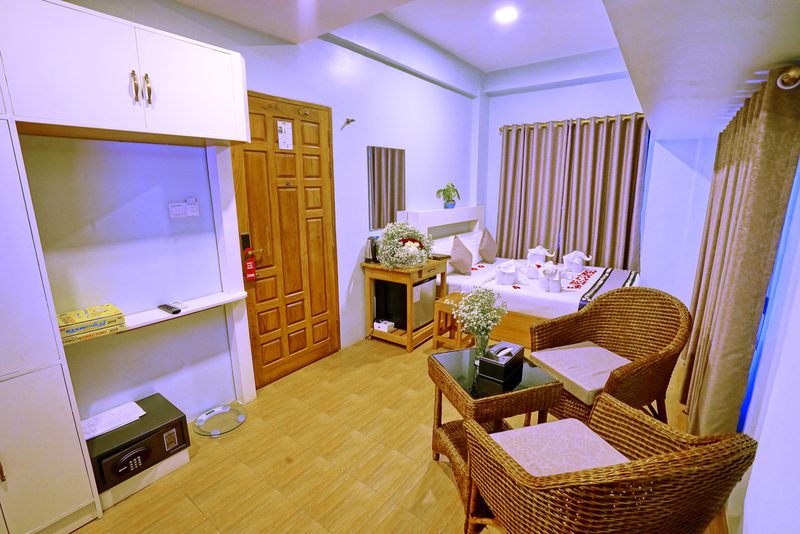
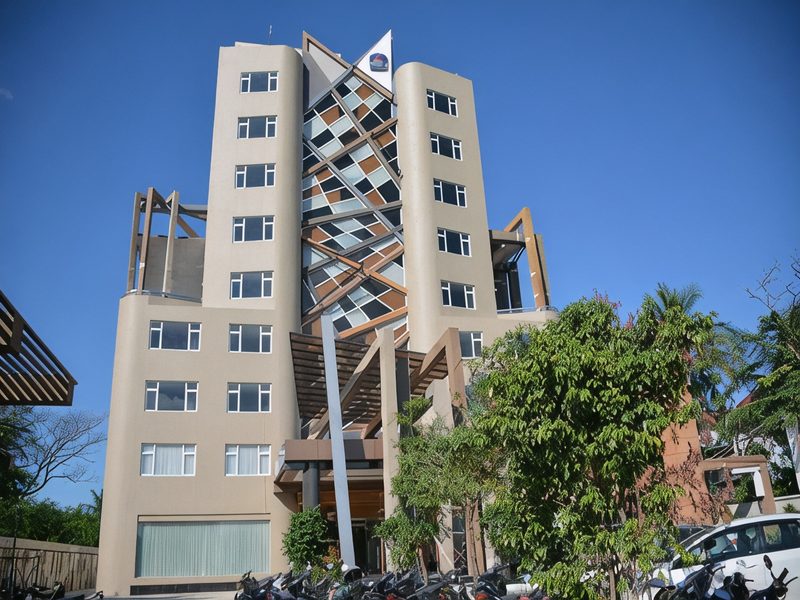
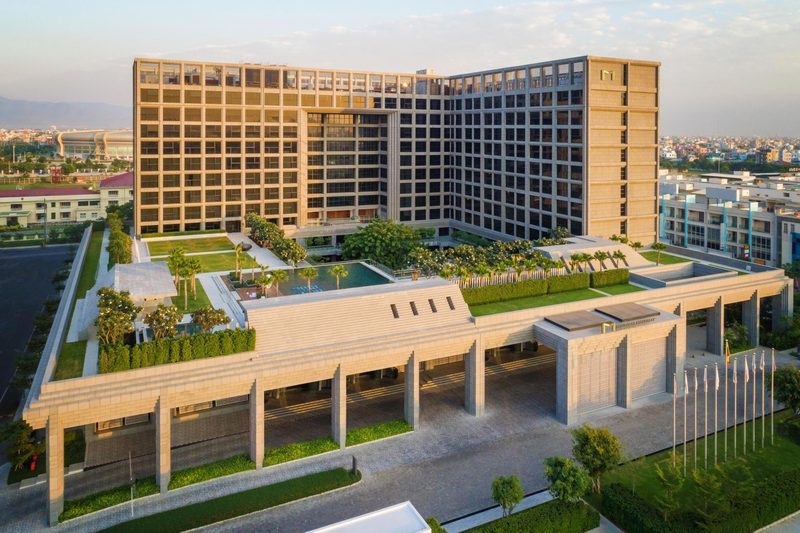
Where to Stay in Mandalay in January
Hand-picked hotels across price tiers for January travellers.
Public Holidays in January
Dates that affect opening hours, transport and crowds
New Year's Day
Observed nationwide as a public holiday. Date calculated from the national holiday calendar.
Independence Day
Observed nationwide as a public holiday. Date calculated from the national holiday calendar.
Karen New Year
Observed nationwide as a public holiday. Date calculated from the national holiday calendar.
New Year's Day
Observed nationwide as a public holiday. Date calculated from the national holiday calendar.
Independence Day
Observed nationwide as a public holiday. Date calculated from the national holiday calendar.
Chinese New Year
Observed nationwide as a public holiday. Date calculated from the national holiday calendar.
Packing Checklist
Bookmark this page — your progress is saved between visits
Need the full list with shopping links?
Climate-specific gear, brand recommendations, and what to leave at home.
View Mandalay Packing List →Essential Tips
Insider knowledge and common pitfalls to avoid
Insider Knowledge
The Mahamuni Buddha face-washing ceremony at 4 AM is Mandalay's most powerful cultural experience, and most tourists either don't know about it or can't drag themselves out of bed for it. Arrive by 3:30 AM, position yourself near the front left side of the hall where the monks enter, and watch as they gently wash the image's face with water and towels while hundreds of devotees press forward in the candlelight. The concentration of belief in that room at that hour, the murmured prayers, the sandalwood smoke, the golden gleam of the image emerging from the washing, is worth more than any pagoda you will visit in daylight. Wake up early. This matters.
Zegyo Market is Mandalay's central market and the place locals shop. But the ground floor is mostly textiles and household goods aimed at residents. Head upstairs to the food section for the real prizes: fermented tea leaf (lahpet) sold from steel trays where you can taste before buying, dried shrimp paste (ngapi) so pungent it clears a 3 m (10 ft) radius, and seasonal tangerines from the Shan hills that are seedier but sweeter than anything you've eaten. Go before 9 AM when the produce is freshest and the aisles haven't yet packed to shoulder width. Go early. Beat the crowds.
The jade market near 86th and 39th Streets is the largest raw jade trading floor in the world, and January's cool mornings make the early start tolerable. Trading begins at dawn under fluorescent lights, with dealers examining rough stones with torches pressed against the surface to judge translucency. Foreigners are welcome to observe but should be cautious about purchasing. The quality differentiation between valuable jadeite and near-worthless nephrite requires expertise that casual buyers simply do not have, and the market's margins reflect this knowledge gap. Watch. Don't buy blindly.
For the best sunset at U Bein Bridge, skip the west bank where every tour group clusters and instead walk to the east end of the bridge and hire a small rowing boat from the fishermen there. From the water, you get the full span of the bridge silhouetted against the sky, with monks and cyclists crossing above you, and the sound of the old teak creaking as it has for over 170 years. January's clear evenings deliver this reliably. The monsoon months lose the sunset entirely behind cloud cover. Escape the crowds. Go east.
Avoid These Mistakes
Avoid packing only for tropical heat and being caught shivering at dawn. January's 14°C (57°F) mornings feel cold after acclimatizing to Southeast Asian temperatures, when you're standing barefoot on stone floors at the Mahamuni Temple at 4 AM. Travelers who brought nothing warmer than a T-shirt end up buying cheap fleece jackets from Zegyo Market on day one. Pack layers. Stay warm.
Resist trying to cover Mandalay, Bagan, and Inle Lake in less than a week. Each destination rewards at least two full days, and the travel time between them, the scenic but slow Irrawaddy ferry from Mandalay to Bagan, eats into your schedule. Rushing through Upper Myanmar means you see the exteriors of famous sites without the quiet, unhurried moments that give them meaning. Two full days in Mandalay itself, plus a day for the ancient capitals circuit, is the honest minimum. Slow down. See more.
Never assume international credit cards work reliably. While some higher-end establishments in Mandalay accept cards, the payment infrastructure can be unpredictable, and plenty of restaurants, transport operators, and craft workshops are cash-only. Arriving without a reserve of clean kyat notes, or depending on a single ATM network, has stranded more than one traveler in an awkward negotiation at the end of a day trip. Carry cash. Avoid stress.
Short on time? See day trips around Mandalay on GetYourGuide.
Ready to plan your trip to Mandalay?
Now that you've got the research covered, here's where to go next.
Explore More Activities in Mandalay
Didn't see anything interesting yet?
Browse Viator's full catalog of tours, day trips, food experiences, and private guides in Mandalay.
See All Mandalay Tours on Viator